

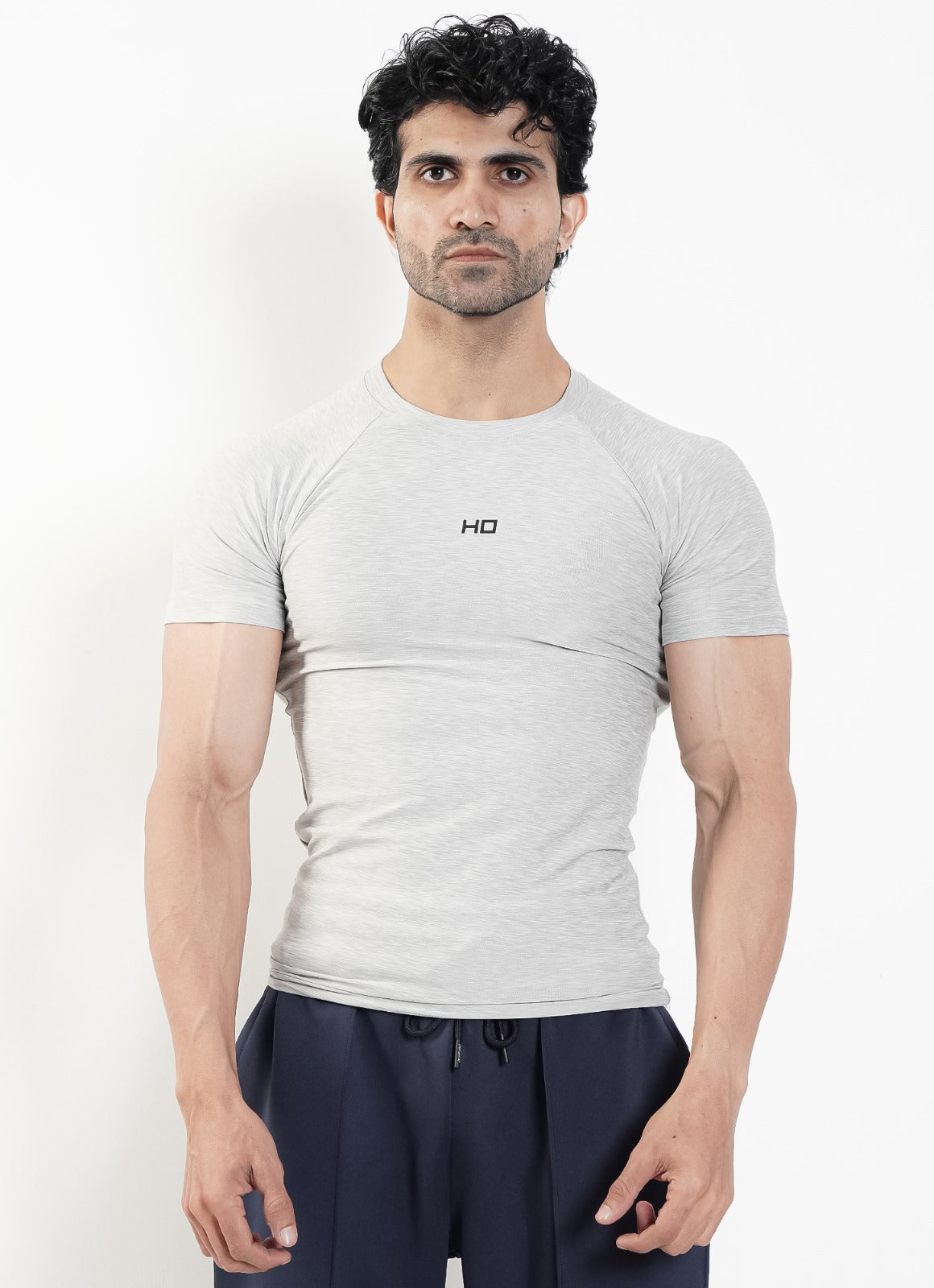
Compression shirts are everywhere in Pakistani gyms, and the claims around them are big: more strength, faster recovery, better posture, even fat loss. Some of that is backed by research. A lot of it isn't. This guide explains what a compression shirt actually does, what the studies say, and when it's worth wearing one.
What is a compression shirt?
A compression shirt is a tight, stretchy top that fits close to your skin like a second layer. It's made from synthetic fabric, usually polyester or polyamide (nylon), mixed with elastane, also called spandex. The elastane gives it stretch and lets it hold its shape against your body.
That close fit is the whole point. A regular gym T-shirt hangs off your body. A compression shirt moves with it.
Benefits you'll notice straight away
It stays in place
Because it's fitted, a compression shirt doesn't ride up during pull-ups, flap around during sprints or get caught on a bench. For lifting, you can see and feel your positioning without loose fabric in the way.
It handles sweat
Synthetic compression fabrics pull sweat away from your skin and dry faster than heavy cotton. In humid cities like Karachi and Lahore, that keeps you more comfortable through a long session.
It cuts down on chafing
With nothing loose rubbing against your skin, there's less friction under the arms and across the chest during repetitive movements like running and rowing.
It works as a base layer
In winter, a compression shirt is a thin, warm first layer under a hoodie or jacket, and you can strip down to it once you've warmed up. See our guide on how to wear a compression shirt for more ways to layer it.
What the research says about recovery
This is where compression gear gets most of its reputation, and the evidence is genuinely mixed:
- Muscle soreness: a 2014 meta-analysis in the British Journal of Sports Medicine pooled 12 studies and found compression garments had a moderate effect on reducing delayed-onset muscle soreness (the stiffness you feel a day or two after a hard session).
- Strength recovery: a 2017 meta-analysis in Sports Medicine of 23 studies found small overall benefits, with the clearest effect on recovering strength after resistance training. However, a 2022 meta-analysis that used a different statistical approach found no effect on strength recovery.
- Most studies weren't on shirts: much of this research used leggings, tights, socks and sleeves rather than tops. A 2016 review of 58 studies found that only around one in eight compressed the torso.
The honest summary: a compression shirt may help you feel less sore after hard training, but don't expect it to replace sleep, food and rest days.
What a compression shirt won't do
- Make you stronger during the session. There's no good evidence that wearing one lets you lift more. For running, an updated meta-analysis found no benefit to race times or time to exhaustion.
- Burn fat or slim you down. It can make you look tighter while you wear it, but it doesn't change body fat.
- Keep you cooler in the heat. A study of an upper-body compression garment during cycling at around 40°C found no cooling benefit during exercise. In Pakistan's summer, hydration, shade and light fabric matter far more.
- Fix your posture. Posture comes from strength and habits, not from a shirt.
Compression shirt vs regular gym T-shirt
| Compression shirt | Regular gym T-shirt | |
|---|---|---|
| Fit | Second-skin, no loose fabric | Regular or relaxed |
| Fabric | Synthetic with elastane for stretch | Cotton, polyester or blends |
| Best for | Lifting, running, layering, hard sessions | Everyday training and casual wear |
| Movement | Moves with you, doesn't ride up | Can ride up or catch on equipment |
| Look | Shows your build | Covers more |
Many people own both: a compression shirt for heavy or sweaty days, and a regular or oversized T-shirt on top or for lighter sessions.
Who should wear a compression shirt?
- Lifters who want a close fit that stays put through presses, rows and pull-ups.
- Runners, footballers and cricketers who want less chafing and a fabric that handles sweat.
- Anyone who trains hard several times a week and wants to try compression for soreness.
- Anyone who wants a warm base layer for winter mornings.
How to get the benefits
- Get the right size. Too loose and it's just a tight T-shirt; too small and it restricts your breathing. See our compression shirt size guide.
- Choose the right fabric. Our graphic compression tees use 72% polyamide, 21% polyester and 7% elastane for a firm hold. The Core uses 80% polyester and 20% spandex for more stretch, and the Melange uses 95% polyester and 5% spandex for a lighter feel.
- Wash it properly. Cold wash, inside out, hang to dry in the shade, and skip the tumble dryer, fabric softener and iron so the stretch lasts.
- Take it off if it hurts. Numbness, tingling or deep marks mean it's too tight.
Frequently asked questions
Do compression shirts actually work?
They do what they're designed to do: fit close, stay in place and manage sweat. Research suggests compression garments may reduce muscle soreness after hard exercise, but the evidence on strength recovery is mixed and there's little evidence they improve performance during a session.
Are compression shirts good for the gym?
Yes, especially for lifting and intense training, because they move with you and don't get in the way.
Is it OK to wear a compression shirt in summer in Pakistan?
Yes, if it's a lightweight, sweat-wicking fabric and you stay hydrated. Just don't expect it to cool you down.
Can a compression shirt help with muscle soreness?
Some studies show a moderate reduction in soreness after hard sessions, but it works best alongside rest, sleep and good nutrition.
Final thoughts
A compression shirt is a practical piece of training kit: a close fit that stays out of your way, handles sweat and may take the edge off next-day soreness. Treat the bigger claims with care, get the right size, and it will earn its place in your gym bag. Explore the full compression T-shirt collection or read our guide to the best compression shirts in Pakistan.

Share:
How to Wear a Compression Shirt: Gym, Layering, Summer and Winter
Best Compression Shirts in Pakistan (2026): Our Top Picks